
A Beginner's Guide to Strength Training: How to Build a Program That Works
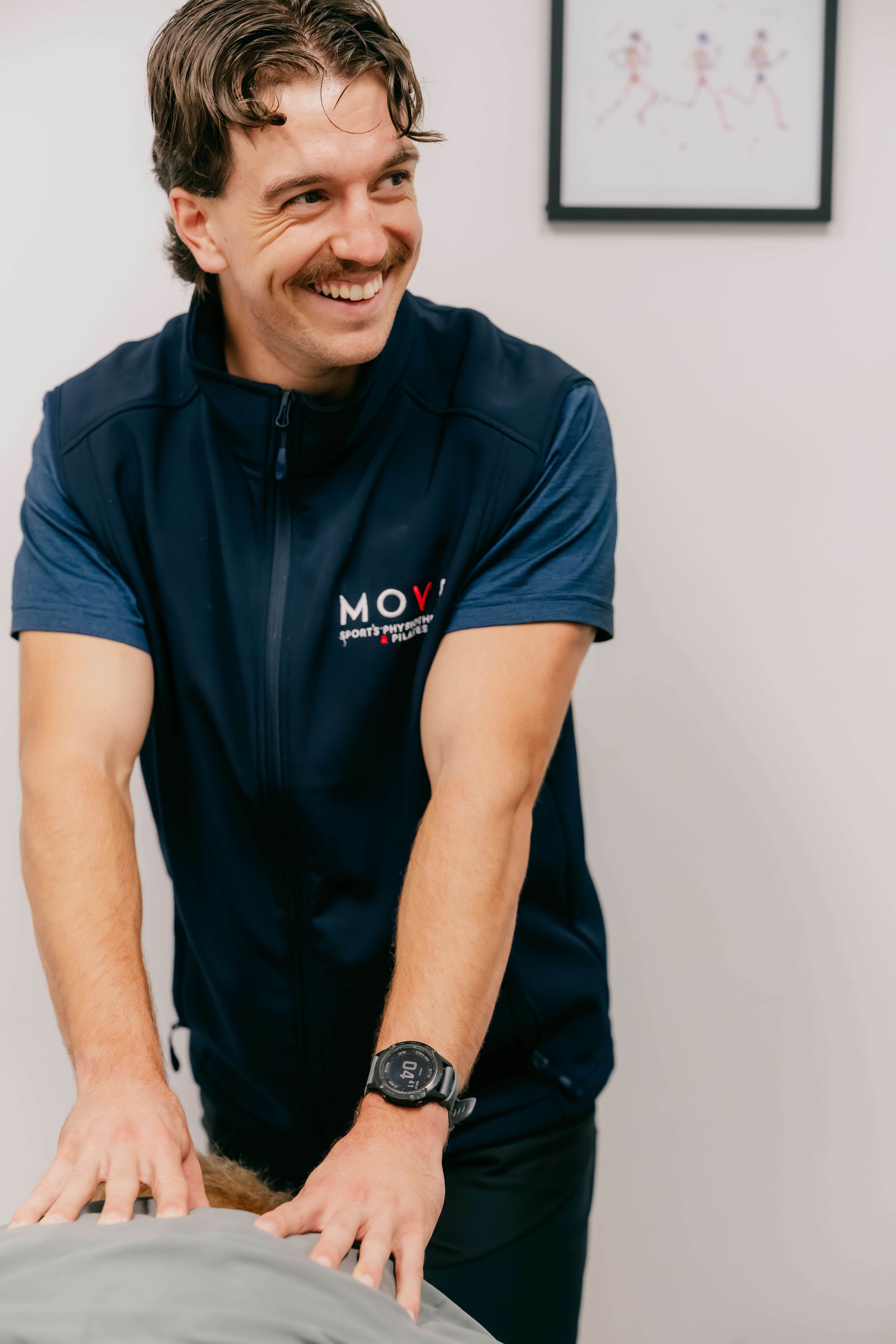
Des Kelly, Physiotherapist - Move Sports Physiotherapy Geelong
Whether your goal is to run further, play sport with fewer injuries, lift your children with confidence, or simply feel stronger in everyday life, a well-designed strength program can help you get there.
Despite its benefits, starting strength training can feel overwhelming. Social media is full of conflicting advice, complicated exercises and "perfect" programs that leave many people wondering where to begin.
The best strength program
The best strength program is one that matches your goals, your experience, your lifestyle...and most importantly - the one you can consistently stick with.
At MOVE Sports Physiotherapy, we believe strength training should be simple, evidence-based and individualised. Here's the framework we use when helping people build a sustainable strength program.
Why Strength Training Matters
Strength training is about much more than building muscle.
Regular resistance training has been shown to:
Increase muscle strength and power
Improve bone density and reduce the risk of osteoporosis
Enhance balance and coordination
Improve metabolic health and insulin sensitivity
Reduce the risk of cardiovascular disease
Improve physical function and independence throughout life
Reduce the risk of many common musculoskeletal injuries when appropriately prescribed
Improve sporting performance by increasing force production and movement efficiency
For runners, cyclists and field sport athletes, strength training has repeatedly been shown to improve performance alongside reducing injury risk. For the general population, it simply makes everyday life easier—from carrying groceries and lifting children to climbing stairs and gardening.
The current physical activity guidelines recommend adults complete muscle-strengthening activities involving all major muscle groups at least two days each week. This provides a solid foundation for long-term health, but the ideal program depends on your individual goals.
Before You Start: Ask Yourself These Questions
A successful program starts long before you choose your first exercise.
1. How many days per week can you realistically commit to?
This is arguably the most important question.
A program that fits your life is always better than the "perfect" program you never complete.
Consistency over months matters far more than training every day for two weeks.
If you can consistently train:
2 days per week: You'll still make excellent progress, particularly if you're new to strength training.
3 days per week: Often considered the sweet spot for balancing strength gains and recovery.
4-5 days per week: Allows greater training volume and exercise variety, often suited to more experienced lifters or those with specific performance goals.
2. How long do you want to spend in the gym?
You don't need to spend hours lifting weights.
Research consistently shows that effective strength sessions can be completed in as little as 45-60 minutes when exercises are well selected.
Knowing your available time helps determine:
The number of exercises
Training volume
Rest periods
Whether full-body or split programs are most appropriate
If you've only got 45 minutes, focus on quality compound exercises rather than trying to fit everything into one session.
3. How much lifting experience do you have?
Your training age matters.
Someone walking into the gym for the first time has very different needs to someone who's been lifting consistently for five years.
Beginners should prioritise
Learning movement quality
Building confidence
Developing consistency
Gradually increasing load
More experienced lifters can begin incorporating
Higher training volumes
More exercise variation
Advanced programming
Specific performance goals
Mastering the fundamentals first creates a much stronger foundation for long-term progress.
4. Are you currently dealing with pain or recovering from an injury?
Pain doesn't automatically mean you should stop strength training.
In fact, appropriately prescribed resistance training is one of the most effective treatments for many musculoskeletal conditions.
However, your exercise selection, loading and progression may need to be modified.
A physiotherapist can help identify:
Which exercises are appropriate
Which movements may need modification
How to gradually rebuild strength without unnecessarily aggravating symptoms
Strength training should work with your body—not against it.
5. What are your goals?
Your goal should shape your program.
Are you training to:
Become stronger?
Improve sporting performance?
Run faster?
Reduce injury risk?
Improve general health?
Build muscle?
Improve body composition?
While most strength programs improve several of these areas simultaneously, your primary goal helps determine exercise selection, training volume and intensity.

Compound Lifts
When designing a program, it's easy to become distracted by dozens of isolation exercises.
Instead, begin with movements that train multiple muscle groups at once.
These are often referred to as compound lifts, and they should form the foundation of most strength programs.
They allow you to lift heavier loads, develop whole-body strength and get the greatest return for your training time.
Lower Body: Squat and Hinge Patterns
Almost every effective lower body program includes a variation of these two movement patterns.
Squat examples include
Back squat
Front squat
Goblet squat
Split squat
Leg press
Squat patterns primarily develop the quadriceps, glutes and core while improving lower-body strength and mobility.
Hip hinge examples include
Deadlift
Romanian deadlift
Trap bar deadlift
Hip thrust
Kettlebell swing
Hinge movements strengthen the posterior chain—including the glutes, hamstrings and lower back—which is essential for lifting, running, jumping and protecting the spine during everyday tasks.
Upper Body: Push and Pull
A balanced upper body program should include both pushing and pulling movements in different directions.
Horizontal push examples
Bench press
Dumbbell bench press
Push-ups
These strengthen the chest, shoulders and triceps.
Vertical push examples
Shoulder press
Dumbbell overhead press
Landmine press
These improve shoulder strength, overhead function and upper-body stability.
Horizontal pull examples
Seated row
Dumbbell row
Cable row
Pulling exercises strengthen the upper back and help counteract prolonged sitting and rounded posture.
Vertical pull examples
Pull-ups
Chin-ups
Lat pulldowns
These develop the lats, shoulders and upper back while improving overall pulling strength.
Don't Forget the Supporting Exercises
Once your major lifts are completed, accessory exercises can target areas that support performance and reduce injury risk.
Examples include
Calf raises
Hamstring curls
Single-leg exercises
Core strengthening
Rotator cuff exercises
Hip strengthening
These don't replace your primary lifts—they complement them.
Progressive Overload: The Secret to Getting Stronger
The biggest mistake people make in the gym, is avoiding progressive overload.
Your body adapts to when its challenged, so results will come from gradually increasing the demand.
This principle is known as progressive overload, and it can be achieved by:
Increasing weight
Performing more repetitions
Completing additional sets
Improving movement quality
Increasing range of motion
Reducing rest periods (depending on your goal)
Small, consistent improvements over time almost always outperform dramatic increases in training load.

Key Takeaway
Strength training doesn't need to be complicated.
The best programs are the ones that are challenging, but can be performed with high quality technique. They're appropriate to your goals, and fits in with your lifestyle.
Whether you're training for better health, improved sporting performance or simply to feel stronger in everyday life, a simple, progressive program built around the basics will almost always outperform an overly complicated one.
If you're unsure where to begin, or you're returning after an injury, working with a physiotherapist or exercise physiologist can help you develop a program that matches your goals, your body and your schedule.
References
American College of Sports Medicine. (2021). ACSM's Guidelines for Exercise Testing and Prescription (11th ed.).
Australian Government Department of Health. Physical Activity and Exercise Guidelines for Adults.
American College of Sports Medicine Position Stand. (2009). Progression Models in Resistance Training for Healthy Adults. Medicine & Science in Sports & Exercise, 41(3), 687–708.
Lauersen, J. B., Bertelsen, D. M., & Andersen, L. B. (2014). The effectiveness of exercise interventions to prevent sports injuries: A systematic review and meta-analysis of randomised controlled trials. British Journal of Sports Medicine, 48(11), 871–877.
Westcott, W. L. (2012). Resistance training is medicine: Effects of strength training on health. Current Sports Medicine Reports, 11(4), 209–216.


