The Gut–Bone Axis: How Your Microbiome Shapes Your Skeleton - And May Prevent Osteoporosis

Georgie Gorman, Clinical Nutritionist - Move Sports Physiotherapy Geelong
When we think about strong bones, we usually think calcium, vitamin D and weight-bearing exercise. All three matter. But over the past decade, research has uncovered a less obvious player: the trillions of bacteria living in your gut.
Scientists now call this link the gut–bone axis. Your gut microbiome helps decide how well you absorb bone-building minerals, how much inflammation reaches your skeleton, and how active your bone-dissolving cells are. The science is young, and most of it comes from animal studies. But the early human evidence is promising, and the practical takeaways overlap with habits that are good for you anyway.
First, a quick refresher on bone
Bone is living tissue that is constantly rebuilt. This process, called remodelling, relies on two cell types working in balance:
Osteoclasts break down old or damaged bone (resorption).
Osteoblasts lay down new bone (formation).
Through childhood and adolescence, formation outpaces resorption, and most people reach their peak bone mass by their late 20s. From mid-life, the balance tips the other way. In women, the drop in oestrogen at menopause speeds up osteoclast activity sharply. If resorption outpaces formation for long enough, bones become thin and fragile. This is osteopenia, and then osteoporosis.
Anything that nudges this balance towards less resorption or more formation, matters for lifelong bone health. That is where the gut comes in.
What is the gut–bone axis?
The gut–bone axis is the two-way communication between your gut microbiome and your skeleton. Your gut is a long way from your hip or spine, so the microbes have to send their messages through the bloodstream and the immune system. Researchers have identified four main routes.
1. Mineral absorption
Gut bacteria ferment fibre that your body can't digest. This lowers the pH in the large bowel and makes calcium and magnesium easier to absorb. In a one-year trial in young adolescents, 8 g a day of an inulin-type prebiotic fibre increased calcium absorption and led to greater gains in whole-body bone mineral content and density than placebo (Abrams et al., 2005).
2. Short-chain fatty acids (SCFAs)
When microbes ferment fibre, they produce SCFAs such as butyrate and propionate. In mice, giving SCFAs or a high-fibre diet increased bone mass and protected against menopause-like and inflammation-driven bone loss. The effect came from slowing osteoclasts, the bone-dissolving cells (Lucas et al., 2018). Butyrate also boosts regulatory T cells, a type of immune cell that calms inflammation and supports bone formation (Pacifici review, JCI).
3. Immune signalling and inflammation
Around 70% of your immune system sits in and around the gut. The microbiome shapes how "switched on" that immune system is. Inflammatory messengers such as TNF-α and IL-17 travel to the bone marrow and drive osteoclasts to break down bone. Mice raised with no gut bacteria at all had fewer of these inflammatory cells in their bone marrow, fewer osteoclasts and higher bone mass — and this reversed once their guts were colonised (Sjögren et al., 2012).
4. Gut barrier integrity ("leaky gut")
A healthy gut lining keeps bacterial fragments where they belong. When oestrogen falls, the lining becomes more permeable in mice. Bacterial products then slip through and trigger inflammation that spreads to bone. Germ-free mice did not lose bone when their sex hormones were removed, which shows the microbiome is needed for this type of bone loss (Li et al., 2016).
The microbiome also influences hormones linked to bone, including IGF-1 (a growth factor) and gut-derived serotonin. However, these pathways are less well understood in humans at this stage.

Optimising gut-health for osteoporosis prevention
The best-supported approach is to feed your existing gut bacteria well while covering the bone basics. None of these steps is risky, and most help support good cardiovascular, immune & metabolic health also.
1. Eat a wide variety of plants
Fibre is the fuel your gut bacteria turn into bone-friendly SCFAs. Australian guidelines suggest about 25 g a day for women and 30 g for men, and most of us fall short. Aim for variety: legumes, wholegrains, oats, nuts, seeds, fruit and vegetables. Foods rich in prebiotic fibres include onions, garlic, leeks, asparagus, slightly green bananas, chicory and cooled potatoes or rice. Increase fibre gradually to avoid bloating.
2. Include fermented foods
Yoghurt and kefir supply live bacteria plus calcium and protein. In 4,310 older Irish adults, more frequent yoghurt intake was linked with higher bone density and better physical function (Laird et al., 2017). This is observational, so it shows an association rather than proof. Sauerkraut, kimchi, miso and tempeh add microbial variety, though their bone effects are untested.
3. Supplementation
There are many reasons why neutraceutial supplemention may be recommened, such as with medication use, nutrient deficiencies and life-stage. However it is reccommended to always seek professionsl adivce first. And where possible, access practitioner only products for superior quality and therapeutic use.
4. Cover the bone essentials
A healthy microbiome can't build bone from missing materials.
Calcium
Vitamin D
Vitamin K2
Magnesium
Protein
Wholefood eating pattern
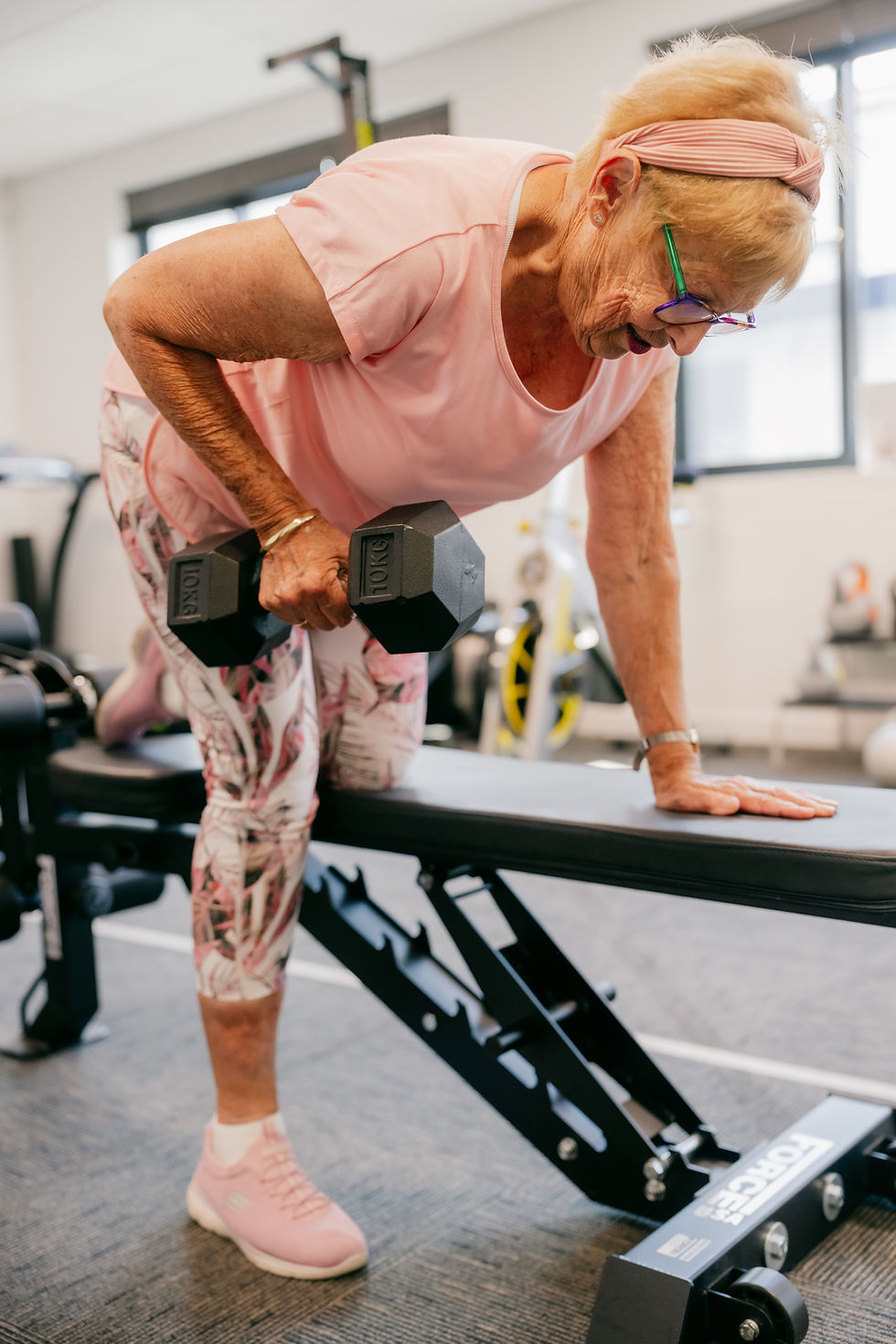
Load your bones with exercise
6. Protect your microbiome
Use antibiotics only when they're genuinely needed, and finish courses as prescribed. Limit alcohol consumption, cease smoking and reduce your intake of ultra-processed foods, as they all harm bone health by disrupting gut health. If you take acid-suppressing medicines long term, review them with your GP, as they can affect mineral absorption and have been linked to fracture risk.
7. Manage gastrointestinal conditions/inflammation
Coeliac disease and inflammatory bowel disease both raise osteoporosis risk through poor absorption and inflammation. If you have one, ask your doctor whether a bone density scan is appropriate. And seek the appropriate support from a registered dietitian or nutritionist who can work with you to heal your gut lining and optimise nutrient absorption and bioavailability.
The bottom line
The gut microbiome influences almost everything in the body, including bone health, through mineral absorption, short-chain fatty acids, immune signalling and the gut barrier.
A healthy gut barrier, and thriving microbiome means the nutrients you need for bone formation can do their job, hormones are regulated appropriately, and inflammation is kept to a minimum.

Meet Georgie
Georgie is a degree qualified clinical nutritionist, with over 20 years experience in the health and fitness industry. Georgie currently runs Move's Bone Builder quarterly nutrition education sessions as part of Move's Bone Builder program.
For personalised nutrition support you can contact Georgie at georgie@movesportsphysio.com.au
References
Abrams SA et al. Prebiotic inulin-type fructans enhance calcium absorption and bone mineralisation in young adolescents. Am J Clin Nutr 2005; reviewed in Whisner CM, Castillo LF. Prebiotics, bone and mineral metabolism. Calcif Tissue Int 2018.
Gregori G et al. Limosilactobacillus reuteri 6475 and prevention of early postmenopausal bone loss. JAMA Netw Open 2024.
Jansson PA et al. Probiotic treatment using a mix of three Lactobacillus strains for lumbar spine bone loss in postmenopausal women. Lancet Rheumatol 2019.
Laird E et al. Greater yogurt consumption is associated with increased bone mineral density and physical function in older adults. Osteoporos Int 2017.
Li JY et al. Sex steroid deficiency–associated bone loss is microbiota dependent and prevented by probiotics. J Clin Invest 2016.
Li P et al. One-year supplementation with L. reuteri counteracts a degradation of gut microbiota in older women with low BMD. NPJ Biofilms Microbiomes 2022.
Lucas S et al. Short-chain fatty acids regulate systemic bone mass and protect from pathological bone loss. Nat Commun 2018.
Nilsson AG et al. Lactobacillus reuteri reduces bone loss in older women with low bone mineral density. J Intern Med 2018.
Pacifici R et al. The gut–bone axis: how bacterial metabolites bridge the distance. J Clin Invest 2019.
Probiotic supplementation and bone health parameters in adults: a systematic review and meta-analysis. Osteoporos Int 2025.
Resciniti S et al. Effects of 12-month probiotic supplementation on BMD and bone turnover markers in early postmenopausal females. Am J Clin Nutr 2026.
Sjögren K et al. The gut microbiota regulates bone mass in mice. J Bone Miner Res 2012.
Wang F et al. Effects of probiotic supplementation on bone health in postmenopausal women: a systematic review and meta-analysis. Front Endocrinol 2024.
Watson SL et al. High-intensity resistance and impact training improves BMD and physical function in postmenopausal women with osteopenia and osteoporosis: the LIFTMOR trial. J Bone Miner Res 2018.