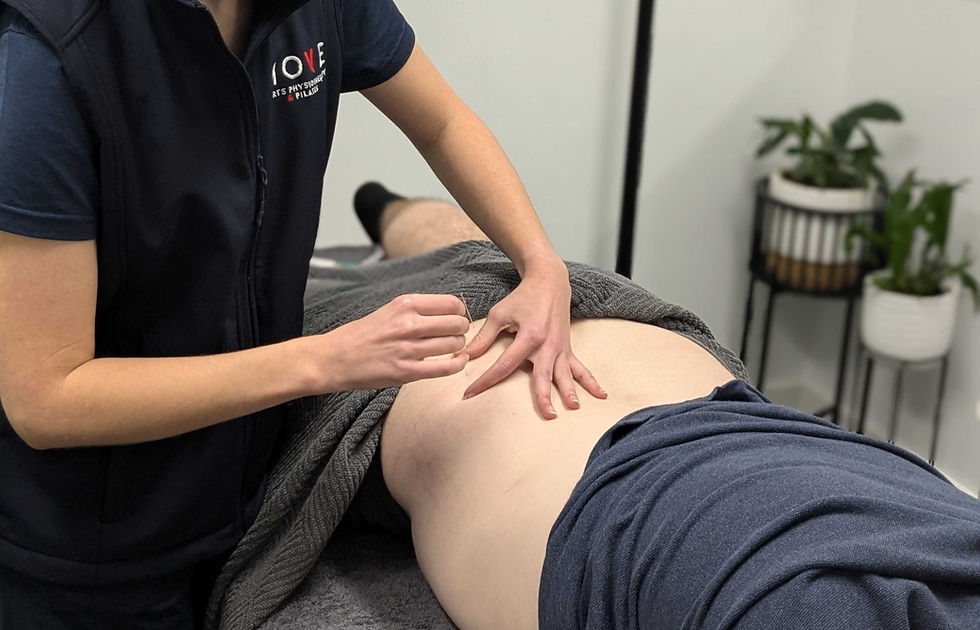
Clinical Pilates Geelong: The Missing Link Between Running and Strength Training
- Jess Mcdonald
- Jan 31
- 4 min read
Why Physio-Led movement is the ideal gateway into strength training for runners
It’s okay — we all know most runners don’t love lifting weights. You’re a runner, you want to run.
But at MOVE, we see the same pattern over and over: runners who are undercooked, pushing too hard, too soon, without the strength capacity to handle the load they’re asking their body to absorb.
This is where strength training becomes essential. Being strong enough is one of the best tools we have to prevent injury and help you run longer, smoother and with less pain.
The challenge? Many runners feel unsure where to start.The gym can feel intimidating, the technique can feel unfamiliar, and it’s hard to know which exercises actually help your running.
This is exactly why Clinical Pilates at MOVE Sports Physio Geelong can be the perfect entry point. Yes — it’s true — Clinical Pilates is not the same as heavy lifting. But stay with me, because it might be the perfect first step to nail your movement patterns, build strength without pain and create the foundation you need to transition confidently into proper strength training.
Excuse the language — but Clinical Pilates really is the “gateway drug” to strength training: safe, supported and genuinely transformative.
Below is how Clinical Pilates supports runners, and why it leads seamlessly into Exercise Physiology and physiotherapist-designed strength training.

Clinical Pilates builds the movement control runners need
Running is a single-leg sport. Every step demands coordinated control of your pelvis, hips, trunk, knee and foot. Yet most runners have never specifically trained these capacities.
Clinical Pilates changes that.
Through physio-led sessions, runners learn:
Trunk and rib control
Deep abdominal stability
Pelvic alignment under load
Glute activation and endurance
Coordinated hip and leg movement
Balance and postural awareness
For many runners, Pilates is the first time their body makes sense. They finally understand why niggles appear, why certain patterns feel “off,” and — most importantly — what they can do to change it.
Clinical Pilates develops strength in the planes-of-motion runners rely on
Although running looks like a straight-line activity, your body must control forces in multiple directions. Clinical Pilates helps runners strengthen in all three planes before introducing heavier lifts.

Sagittal Plane Strength for Runners
Supports propulsion, push-off and load absorption. Great Pilates-inspired movements include:
Hip hinge training
Glute bridge variations
Controlled deadlift patterns
Frontal Plane Strength for Runners
Prevents hip drop, knee collapse and overuse injuries. Helpful movements include:
Single-leg squat variations
Lateral step work
Side plank progressions
Transverse Plane Strength for Runners
Improves rotational control and running efficiency. Useful movements include:
Trunk rotation control drills (ask Tanner for his thoughts — he has strong opinions on these)
Single-leg RDL with reach
Anti-rotation exercises such as modified Pallof presses
Physio-Led strength training becomes easier when pilates lays the groundwork
Let’s be clear: heavy, slow resistance training is the gold standard for runners. Nothing matches it for building performance, power and resilience.
But Clinical Pilates solves the biggest barrier runners face before entering the gym: “I want to get strong, but I don’t know where to start.”
Pilates gets you ready — both physically and mentally.
It prepares you for the lifts you’ll eventually progress to and helps you feel confident in your body again. When the time is right, your physio will guide you into more challenging strength work safely and progressively, building on the technique you learned in the Pilates studio.
A Physio-Led transition from pilates to strength training at MOVE
Runners usually shift into strength training once they show:
Consistent pelvic control
Reliable hip stability
Good glute activation
Strong hinge and squat patterns
Balanced single-leg alignment
From there, our Exercise Physiology and physiotherapy team will build a strength plan that may include:
Deadlift variations
Lunges and split squats
Frontal plane strength
Anti-rotation training
Calf and foot strengthening
Plyometric loading when appropriate
This progression is strategic and tailored to each runner’s goals — never rushed, always purposeful.

A Strength Routine for Runners Built on Pilates Principles
A simple, balanced strength routine for runners may include:
Sagittal Plane Strength - Hip hinge or glute bridge variation.
Frontal Plane Strength - Lateral step-down or side plank variation.
Transverse Plane Strength - Anti-rotation control exercise.
Running-Specific Accessory Work - Calf strength, foot integrity training or balance drills.
Why Geelong runners are thriving at MOVE
Our physiotherapists and exercise physiologists integrate:
Running biomechanics
Clinical Pilates
Sports rehabilitation
Load management
Strength and conditioning science
Together, this creates a powerful, evidence-informed approach to helping runners feel stronger, smoother and more efficient — whether returning from injury or training for their next event.
Clinical Pilates is often the missing link for runners who want to get strong but feel unsure where to begin. It provides structure, confidence and clarity — the ideal launching pad for truly effective strength training.
Ready to Build a Stronger Running Body?
If you want to reduce injuries, improve running efficiency and build confidence before stepping into the gym, Clinical Pilates may be the perfect place to start.
Book a Clinical Pilates Running Assessment at MOVE Sports Physiotherapy & Pilates Geelong
and let us help you transition from movement → strength → performance with clarity and confidence.