Why Strength Training Matters More Than Ever (and why it’s not just a fad)
If you’re like my Mum and Dad — born in 1960 and 1956 — you’ve had years of being told to “stretch more,” “avoid lifting,” or “protect your joints.” For a long time, flexibility and gentle movement were considered the safest way to stay healthy, prevent injury and manage pain.
But the research has shifted dramatically — and so has modern physiotherapy.
Today, strength training is one of the most recommended, most protective and most empowering forms of exercise we have. Lifting weights is no longer just for bodybuilders & athletes. We now know everyone can benefit from getting stronger, especially as we age.
At MOVE Sports Physio Geelong, we see every day how strength training transforms people’s confidence, reduces pain and helps them move better through life. Here’s why it has become a core part of our Exercise Physiology and physiotherapy approach — and why it absolutely isn’t a fad.
Strength Training Isn’t a Trend, It’s Evidence-Based Physiotherapy
Strength training has earned its place because the research is incredibly strong. It consistently helps with:
Chronic and recurring back pain
Knee and hip osteoarthritis
Tendon pain
Bone density and osteoporosis prevention & management
Balance and falls prevention
Healthy ageing
Metabolic health and long-term disease prevention
Mood, energy and sleep
Overall longevity
In fact, strength training is now recommended by the World Health Organization and Australia’s leading musculoskeletal guidelines for almost every adult, including those managing ongoing pain.
This shift didn’t happen because the fitness world changed. It happened because science caught up with what our bodies actually need.

Why Strength Training Matters for Pain
Pain is not simply a “tissue problem."
Your nervous system plays a huge role, especially if the pain has been hanging around for a while.
Strength training helps by increasing our capacity — which means:
Improving tissue tolerance - Our tendons and muscles can do more, more often, without becoming irritated.
Increasing load capacity - We can tolerate more of a movement or activity before symptoms appear.
Reducing nervous system sensitivity - Strength training builds regulation and improves our system’s ability to handle stress.
Helping joints feel supported and safe - Even if joints are “worn out,” stronger muscles around them often reduce pain and symptoms.
Reducing flare-up frequency - Because tissues are stronger and more tolerant, there is less reactivity.
Improving movement confidence - Strength changes how safe and capable your body feels in everyday life. For people living with chronic pain, hypermobility, fatigue or invisible illnesses, we use strength training gradually and purposefully — and the results are often outstanding.
Strength Training Helps You Age Well
It’s depressing but true: from the age of 30, we naturally begin to lose muscle each year. After 50, this accelerates. Without strength training, this can lead to:
Increased pain
Reduced balance
Slower metabolism
Reduced bone density
Higher fall risk
Loss of confidence in movement
Strength training is the only proven way to reverse muscle loss and protect bone health — especially important for women navigating menopause and post-menopause.
This is one of the reasons we developed MOVE’s Bone Builder and Strength Rehab programs.
How to Start Strength Training
Most people overthink this step. You don’t need a gym membership, complicated equipment or perfect technique. You just need a plan that matches your current capacity.
Here’s where we start many clients:
1. Sit-to-Stand (or Squat) - Builds leg and glute strength.Try 2–3 sets of 8–12 reps.
2. Hip Hinge (Deadlift pattern with a kettlebell or dumbbell) - Teaches safe lifting mechanics and protects your back.Start light.
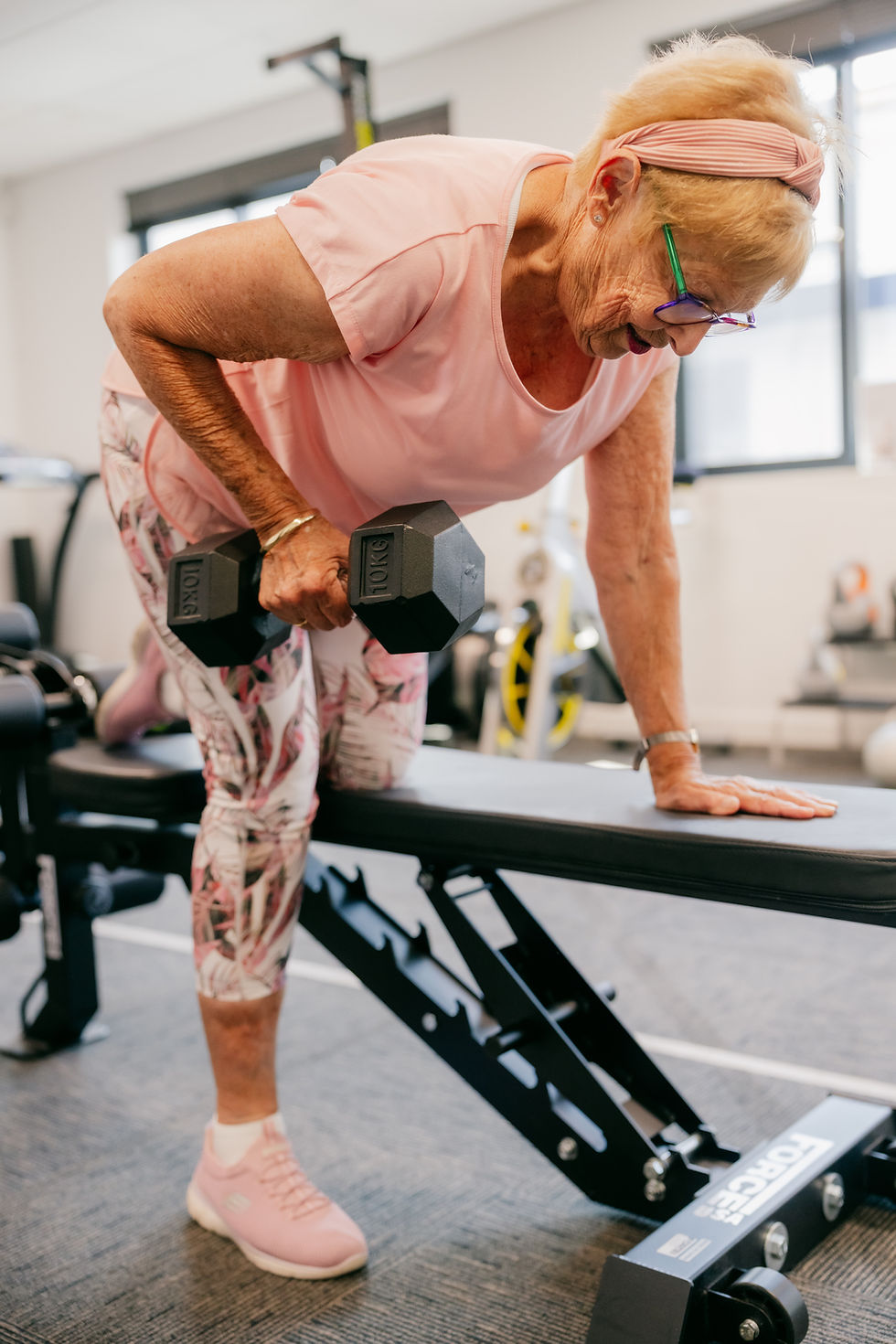
3. Row or Pull Exercise - Great for posture, upper back strength and shoulder stability.
If these feel too easy or too hard, your physio will help modify them.
How Often Should You Strength Train?
Aiming for two sessions per week is enough for most people to see meaningful change, especially if you’re new to strength work.
Your program should include:
a warm-up
4–6 strength exercises
2–3 sets of each
gradual progression over time
A physio- or EP-guided strength plan is ideal if you have:
Back pain
Joint pain
Hypermobility
Osteoporosis
Unpredictable flare-ups
Fear of lifting
Previous injuries
Fatigue-related conditions
This is exactly what we deliver in our Strength Rehab and Clinical Pilates streams at MOVE.
Ready to Get Stronger With a Physio?
At MOVE Sports Physiotherapy & Pilates in Geelong, we specialise in physio-led training, integrating:
Strength rehab
Clinical Pilates
Pain science education
Sports conditioning
Bone health programs
Personalised load management

Whether you’re returning from injury, managing ongoing pain or simply wanting to feel stronger, we’d love to support your journey.
Book an assessment today with one of our experienced physiotherapists or exercise physiologists.
And let’s build a stronger, more confident you.